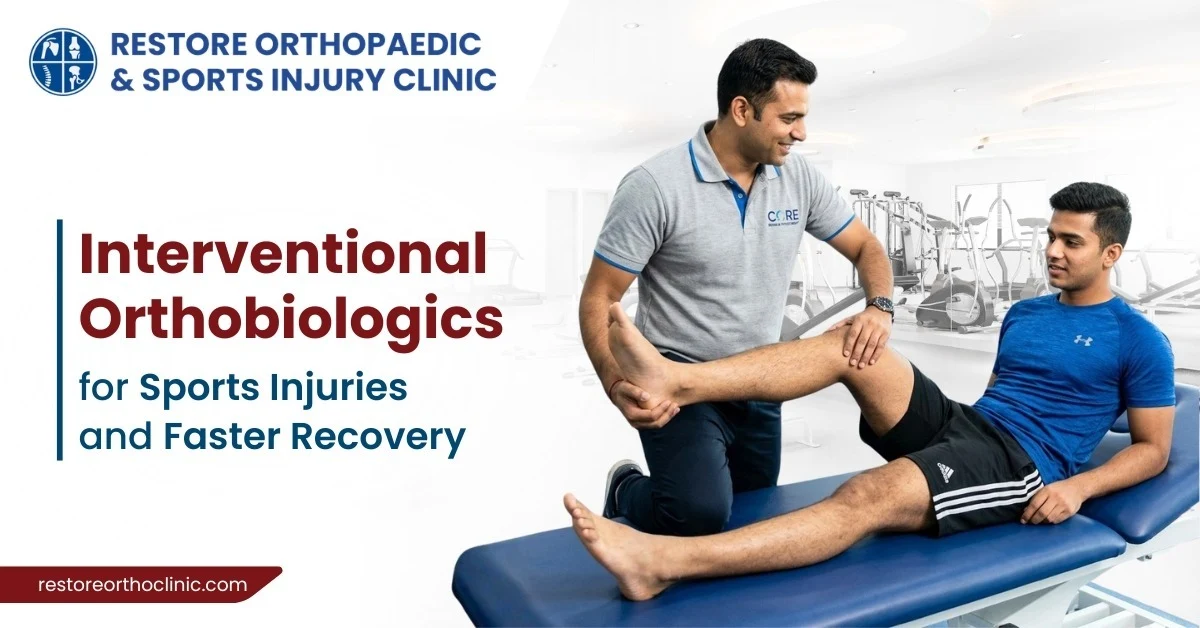
Interventional Orthobiologics for Sports Injuries and Faster Recovery
Whether you are a professional athlete, a fitness enthusiast, or a weekend cricket player, sometimes, you are no exception to being prone to sports injuries. One wrong movement, an awkward landing, or overuse of a joint can suddenly pull you away from the activities you love and leave you with pain that refuses to go away. For many people, the biggest frustration is not just the injury itself, but the long recovery time that follows.
As an orthopaedic specialist, I often encounter this question in my clinic. “Is there a way to heal faster without immediately going for surgery?” This is where interventional orthobiologics is changing the conversation in sports medicine.
It is a treatment approach that focuses on helping the body repair and heal injured tissues naturally using biologic substances derived from the patient’s own body. Instead of simply masking pain, these treatments aim to support tissue repair and improve healing at the source of the injury.
What Are Interventional Orthobiologics?
The word may sound highly technical, but the idea behind it is quite simple. Orthobiologics refers to substances naturally found in your body parts, such as bones, joints, muscles, ligaments, and tendons. These substances include platelets, stem cells, growth factors, and proteins that play a very important role in repairing damaged tissues.
The word “interventional” refers to the use of image-guided procedures such as ultrasound or fluoroscopy to precisely deliver healing substances into the injured area.
This approach is becoming increasingly popular among athletes and sports injury patients because it reduces inflammation, encourages tissue repair, improves recovery, and helps patients regain function with minimal invasive intervention.
Why interventional orthobiologics for sports injuries?
Traditional treatments like surgery or prolonged physiotherapy are still important, but they come with long recovery timelines and, in the case of surgery, it carries real risk factors. Orthobiologics offers a middle path. It is a minimally invasive procedure, often done in a clinic setting, and it is increasingly backed by research.
Common Orthobiologic Treatments Used in Sports Medicine
- Platelet-Rich Plasma (PRP): A small sample of your blood is drawn, spun in a centrifuge to concentrate the platelets, and injected into the injured area. Platelets carry growth factors that kickstart the healing process.
- Bone Marrow Aspirate Concentrate (BMAC):Stem cells and growth factors are harvested from your bone marrow (usually from the hip area) and injected into the injury. It's particularly useful for cartilage damage and joint degeneration.
- Hyaluronic Acid Injections:Often used for knee osteoarthritis in athletes, this acts as a lubricant and shock absorber for the joint.
- Prolotherapy: A solution (often dextrose-based) is injected to trigger a controlled inflammatory response, stimulating the body's natural repair mechanisms.
Common Sports Injuries Treated with Orthobiologics
Orthobiologics has shown the most promise in treating these sports injuries:
- Tendon injuries: Achilles tendinopathy, patellar tendinitis, and tennis elbow are classic examples where PRP has delivered solid results.
- Ligament sprains: Partial tears of the ACL, MCL, or ankle ligaments can benefit from regenerative injections that support tissue repair.
- Cartilage damage: One of the trickiest injuries to heal naturally, since cartilage has poor blood supply. BMAC and PRP are being explored as ways to slow degeneration and encourage repair.
- Muscle tears:Growth factors from PRP can help muscle fibres knit back together more efficiently.
What Makes It Different From Conventional Treatment?
When you inject PRP into a damaged tendon, you’re not just reducing inflammation, you’re signalling the tissue to regenerate. You’re working with the body’s own healing system.
That said, it’s not a magic fix. Results vary depending on the type and severity of the injury, the patient’s overall health, and how well the procedure is executed.
Bottom line
Interventional orthobiologics is becoming an important part of this shift. With advancements in regenerative medicine and image-guided procedures, many patients now have access to minimally invasive options that support recovery while helping them stay active.
For athletes and active individuals, the real goal is not simply returning to sports quickly, but returning safely, confidently, and with better long-term joint and muscle health.
Because at the end of the day, recovery is not just about getting back into the game. It is about making sure your body is truly ready for it.
Tags:
Share This:
FAQ
1. What are the early signs of arthritis?
Early signs may include persistent joint pain, stiffness (especially in the morning), swelling around the joint, reduced flexibility, and discomfort that worsens with activity.
2. Is it normal to have joint pain as we get older?
Occasional joint pain can happen with age due to wear and tear on the joints. However, ongoing or worsening pain should be evaluated by an orthopedic surgeon to rule out arthritis or other joint conditions.
3. How can I tell if my joint pain is arthritis or just temporary pain?
Temporary joint pain usually improves with rest, ice, or mild medication within a few days. Arthritis-related pain tends to last longer, may come with swelling or stiffness, and often affects joint movement over time.
4. Can arthritis affect young adults?
Yes. While some types of arthritis are more common with age, conditions like rheumatoid arthritis can affect people in their 20s, 30s, or even younger.
5. Can arthritis be cured?
While many types of arthritis cannot be completely cured, early diagnosis and proper treatment from an orthopedic surgeon can help manage symptoms, slow progression, and improve quality of life.