Why Is It Becoming Popular for Knee Pain?
Knees take an absolute beating over a lifetime. Whether it’s years of running, carrying extra weight, an old sports injury, or just the wear-and-tear because of ageing, the knee joint is one of the most common places where things go wrong.
For people dealing with osteoarthritis, traditional options often feel like a frustrating compromise. Painkillers just mask the problem from the surface. Cortisone shots can help in the short term, but may damage tissue over time. And surgery feels like a big commitment with a long recovery.
This is where orthobiologic plasma treatment has gained attention.
The treatment is often considered for early to moderate knee arthritis, cartilage wear and tear, ligament injuries, tendon inflammation, runner’s knee, sports-related knee injuries, and chronic knee pain that keeps returning.
How does the orthobiologic plasma treatment work?
The procedure is fairly quick, usually completed in a single clinic visit.
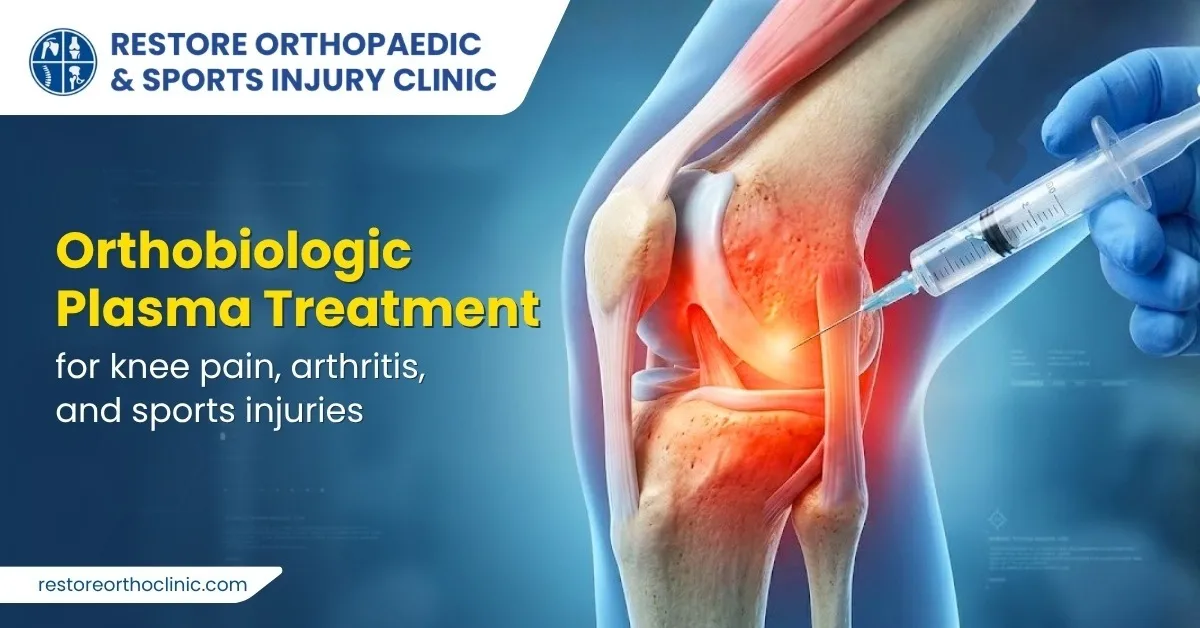
First, a small sample of blood is taken from the patient. This blood is then processed in a specialised machine that separates the plasma and concentrates the healing components. That prepared plasma is then injected directly into the affected joint or tissue, typically guided by real-time imaging to ensure accurate placement.
Most patients walk out of the clinic the same day with minimal disruption to their routine. As for results, the timeline varies from person to person. Some notice a meaningful difference within a few weeks, while others experience a more gradual improvement. Recovery is largely influenced by factors such as age, lifestyle, overall joint health, and the condition’s stage.
How does this help with arthritis?
Arthritis is not just a simple ‘joint pain,’ but it’s the reality that runs deeper. It’s a progressive condition where the cartilage that cushions the joint slowly breaks down and starts making that protective layer thin. Because of this, everyday movements become increasingly painful and restricted.
For those living with knee arthritis, the symptoms are all too familiar: stiffness that’s worst first thing in the morning, discomfort when climbing stairs, an audible cracking or grinding in the knee, swelling that comes and goes, and a general reluctance to walk any real distance.
Orthobiologic plasma treatment isn’t an overnight fix, and it won’t regenerate a severely damaged joint from scratch. But for many patients, it offers something genuinely valuable, that is, a reduction in inflammation, a noticeable improvement in comfort, and better day-to-day joint function. For those who want to stay active and put off more invasive interventions for as long as possible, orthobiologic plasma treatment can make a meaningful difference.
How does this help with sports injuries?
Sports injuries are a different segment. Ligament strains, tendon damage, muscle stress, and overuse injuries are incredibly common among athletes and active individuals and historically, the answer for this has almost always been the same. Rest, wait, and rehabilitation.
But the Orthobiologic treatment is changing that altogether. It’s being explored for a wide range of sports-related conditions, including tennis elbow, golfer’s elbow, Achilles tendon injuries, ligament sprains, muscle strains, rotator cuff injuries, and jumper’s knee.
For athletes who want to get back to doing what they love, without rushing into surgery, it’s an option worth a serious conversation with their specialist.
Is the treatment safe?
Since the treatment uses the patient’s own blood, the risk of allergic reaction is generally very low. However, like any medical procedure, it should only be performed after proper evaluation by a qualified orthopedic or sports medicine specialist.
Not every patient is an ideal candidate. Severe arthritis, complete ligament tears, or advanced joint damage may require different treatment approaches.
That is why proper diagnosis matters before deciding on any treatment plan.
Bottom line
Orthobiologic plasma treatment represents a genuinely exciting shift in how we think about healing and moving away from just suppressing pain toward actually supporting recovery. It’s your own biology, optimised and put to work exactly where you need it most.
If you’ve been living with knee pain, arthritis, or a stubborn sports injury, it’s absolutely worth asking your orthopedic specialist whether this treatment could be part of your path back to feeling like yourself again.