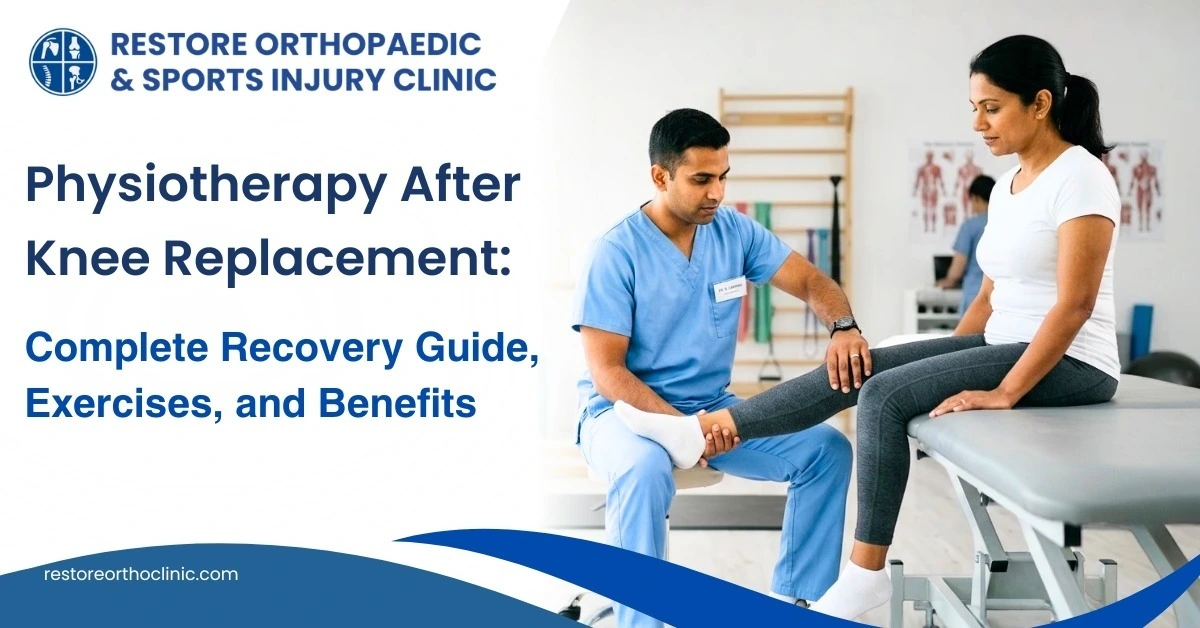
One of the remedies for years of joint pain, stiffness, and difficulty in walking is knee surgery. For most people, undergoing knee replacement surgery is a major step toward living with less pain and better mobility.
A knee replacement surgery can give people back their freedom to walk, climb stairs, and move without pain. But the thing is, surgery is just one part of the journey. The real recovery begins afterwards. Physiotherapy is what makes the surgery a complete success.
In this blog, let’s understand why physiotherapy after knee replacement is essential, what recovery looks like, and which exercises are commonly recommended.
Why Physiotherapy Is Important After Knee Replacement
Many people assume that once the surgery is done, after a few days of rest, the knee will automatically return to normal. But the reality is different. During surgery, muscles, tendons, and tissues around the knee get a little disturbed while the new joint is being placed. And after surgery, your knee feels weak, swollen, or stiff. Without proper rehabilitation, this can lead to prolonged stiffness, muscles may remain weak and most importantly, recovery can slow down significantly.
In such a scenario, physiotherapy plays a major role in regaining strength, flexibility, balance, and confidence so you can return to daily activities safely.
How the Recovery Looks After the Knee Replacement
Everybody’s recovery journey is different. Healing depends on age, overall health, fitness level and dedication towards physiotherapy. And also recovery doesn’t happen as a single event, it happens in stages. Here’s a general realistic timeline.
Week 1-2: Early recovery stage
In this phase, the focus is on pain control, gentle movement, and swelling reduction. With the help of physiotherapy, patients usually begin to walk within 24 hours after surgery. A physiotherapist helps a patient stand, walk with support, and perform simple exercises.
The major goal of this week is to improve blood circulation, prevent stiffness, support gentle knee bending and straightening, and make sure the patient can walk safely with support.
Week 3-6: Building the strength and mobility
By this time, the pain must have reduced gradually, and patients become more comfortable walking with reduced support. Now the therapy shifts towards improving strength and range of motion.
This phase targets muscle strength, balance, and the ability to bend and straighten the knee.
Week 6-12: Functional recovery phase
This is the phase in which patients slowly begin to return to their daily activities with more confidence. If the patient had followed the physiotherapy routine consistently, by this time, walking would become easier, and they could perform routine activities with less discomfort and support.
In this phase, the therapist recommends starting simple activities like climbing stairs, getting in and out of a car, and walking longer distances than before. The focus here is to improve endurance, stability, and balance.
3-6 months: The advanced recovery time
Full recovery can take up to six months or more, depending on the patient. But by this time, most patients return to a more active lifestyle. With regular physiotherapy and exercise, most people experience significant improvement by this stage.
Common Physiotherapy Exercises After Knee Replacement
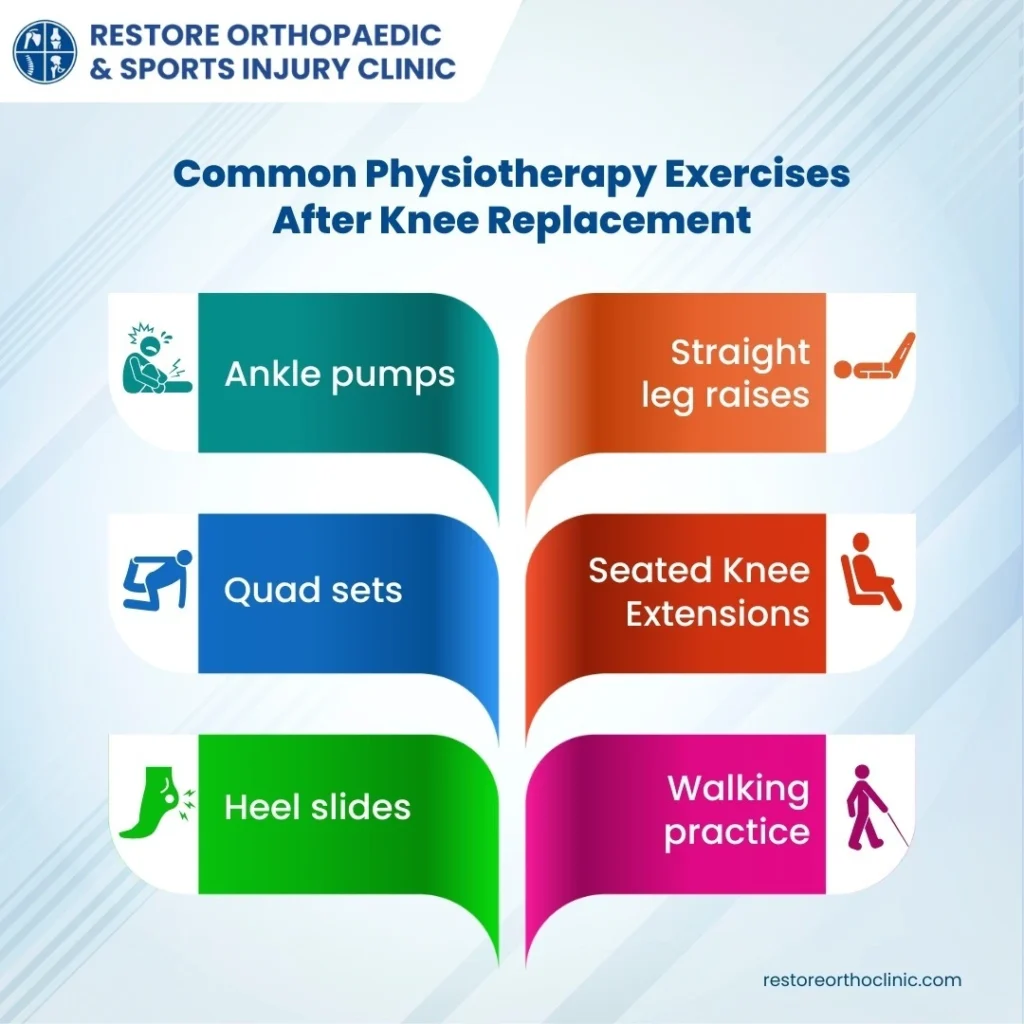
Exercises play a major part in every stage of knee replacement recovery. A physiotherapist will customise a program based on the patient’s needs and progress. However, here are some commonly recommended exercises.
- Ankle pumps: This is one simple exercise a therapist recommends first thing after the surgery. This is moving the foot up and down repeatedly, but slowly. The benefits of this exercise are that it improves blood circulation, reduces swelling and lowers the risk of blood clots.
- Quad sets: This looks like tightening the thigh muscle while keeping the leg straight, holding it for a few seconds and releasing. This helps in rebuilding strength without stressing the joint.
- Heel slides: Heel slide is sliding the heel toward the body, bending it and slowly straightening it back while lying down. This improves knee flexibility and gradually increases the range of motion.
- Straight leg raises: This is keeping one leg straight and slowly lifting it upward and slowly lowering it back. It helps in strengthening the muscles that support the knee and aids in recovery.
- Seated Knee Extensions: This is a sitting exercise. Sit on a chair and gently extend the knee as much as possible. Hold it briefly and relax the knees. Again, this supports the recovery by reducing the stiffness and improving the flexibility.
- Walking practice: This may sound simple, but walking is one of the most effective recovery exercises after knee replacement. Start slowly using a walker, cane or support, and later gradually progress to independent walking as the strength improves. Walking strengthens muscles, improves mobility and most importantly, builds confidence.
Benefits of Regular Physiotherapy After Knee Replacement
Patients who follow a structured physiotherapy program after knee replacement can make a huge difference in recovery outcomes. To sum up this guide, here are the major benefits.
- Faster recovery and early return to daily activities
- Better long-term joint function
- Reduced risk of stiffness or scar tissue restricting movement
- Improved balance and muscle strength
- Overall, greater satisfaction with the surgical outcome and a better quality of life after the surgery.
Bottom line
Knee replacement surgery can be life-changing, but surgery alone is not enough. Physiotherapy is what truly helps restore movement, strength, and function. With the right guidance, consistency, and patience, most patients return to walking, climbing stairs, and enjoying daily activities with far less pain than before.
Your new knee needs time, care, and movement after the surgery, and physiotherapy provides exactly that path toward a stronger recovery.
Tags:
Share This:
FAQ
1. What are the early signs of arthritis?
Early signs may include persistent joint pain, stiffness (especially in the morning), swelling around the joint, reduced flexibility, and discomfort that worsens with activity.
2. Is it normal to have joint pain as we get older?
Occasional joint pain can happen with age due to wear and tear on the joints. However, ongoing or worsening pain should be evaluated by an orthopedic surgeon to rule out arthritis or other joint conditions.
3. How can I tell if my joint pain is arthritis or just temporary pain?
Temporary joint pain usually improves with rest, ice, or mild medication within a few days. Arthritis-related pain tends to last longer, may come with swelling or stiffness, and often affects joint movement over time.
4. Can arthritis affect young adults?
Yes. While some types of arthritis are more common with age, conditions like rheumatoid arthritis can affect people in their 20s, 30s, or even younger.
5. Can arthritis be cured?
While many types of arthritis cannot be completely cured, early diagnosis and proper treatment from an orthopedic surgeon can help manage symptoms, slow progression, and improve quality of life.