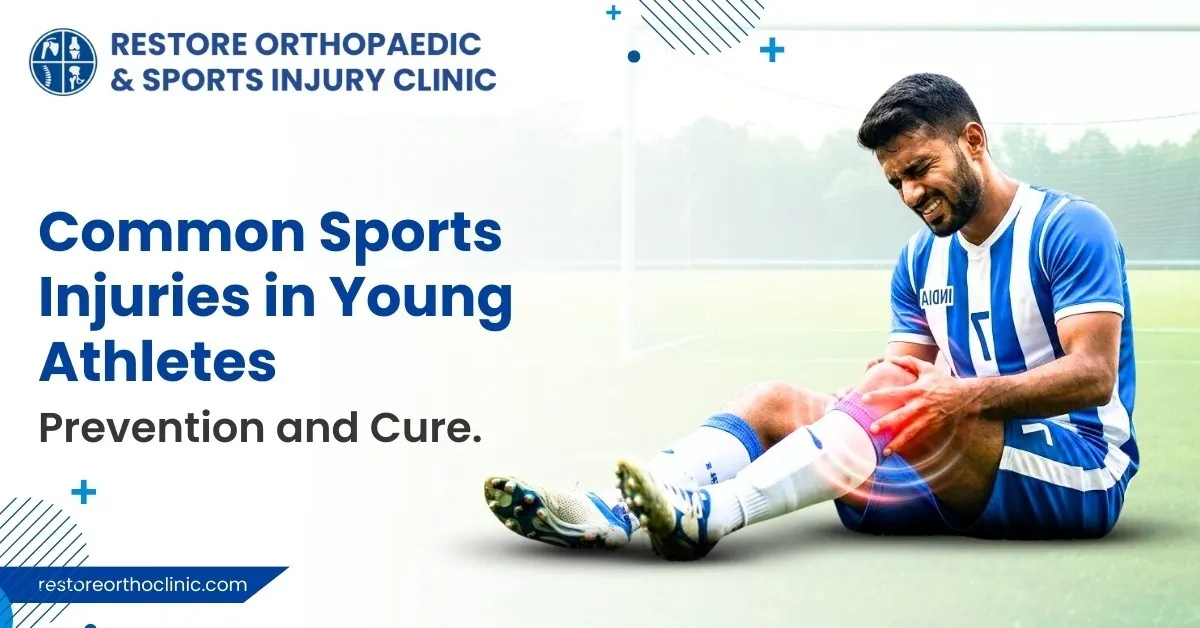
Common Sports Injuries in Young Athletes Prevention and Cure.
Whether it’s a weekend of soccer, school basketball or competitive gymnastics, for many young athletes, sport is not just a hobby, it’s a passion. Sports play a powerful role in a child’s growth. They build discipline, confidence, teamwork, and resilience.
But somewhere between chasing the passion and performance, injuries can step in. Sports injuries in young athletes are more common, and here is why.
Young athletes train hard to perform better, and their growing bodies are often underprepared for the physical demands placed on them. Unlike adults, children and teenagers are still developing. Their bones are growing, muscles are strengthening, and coordination is still improving. When training intensity increases faster than the body can adapt, injuries begin to appear.
But the good news is that many of these injuries are preventable. And even when they happen, knowing how to respond can make a huge difference in recovery.
Let’s talk about the most common sports injuries in young athletes, how to prevent them, and what to do if they occur.
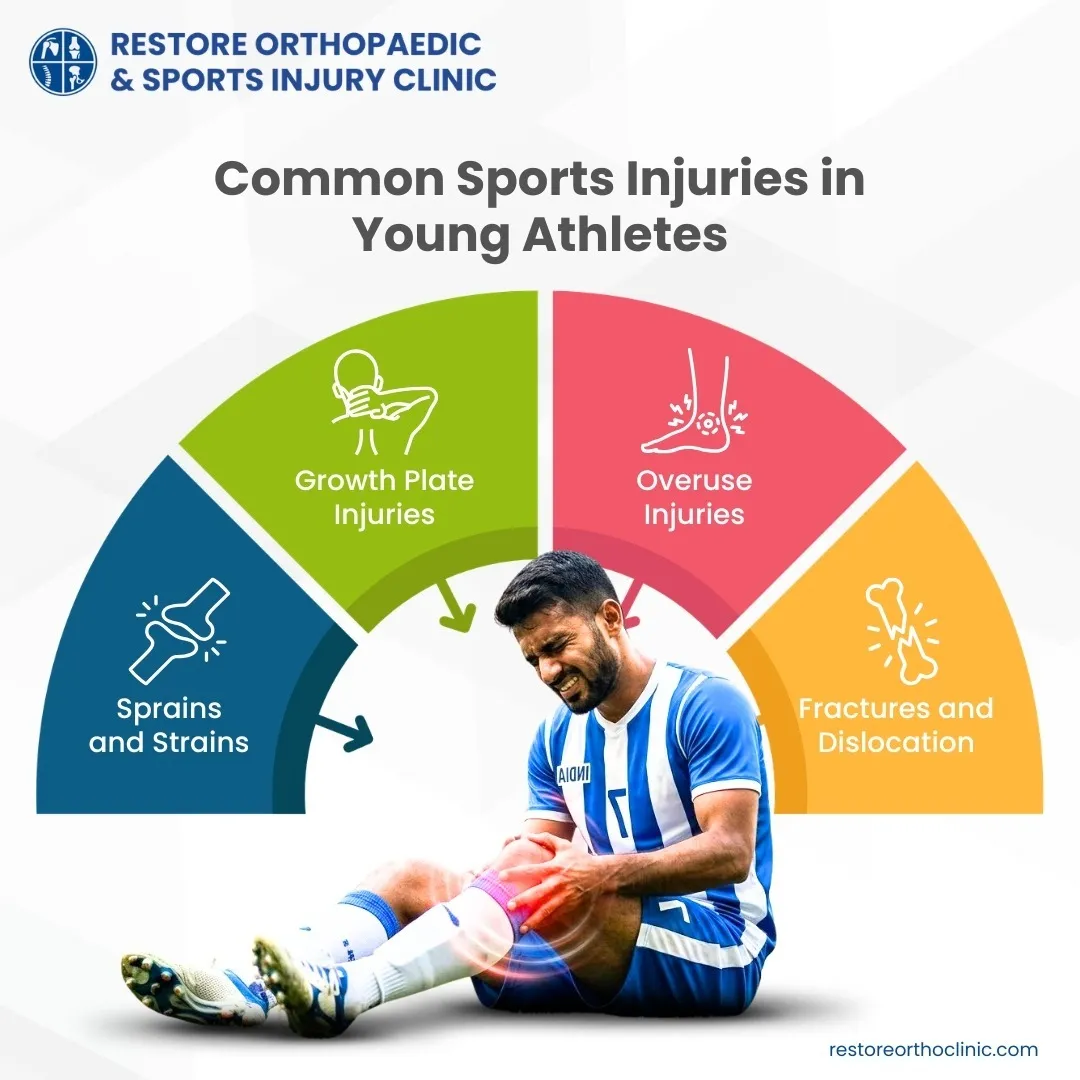
1. Sprains and strains
One wrong step or one awkward landing, that’s all it takes to cause the most frequent sports injuries in young athletes.
- Sprains occur when ligaments are stretched or torn. They commonly affect the ankle, knee, or wrist.
- Strains involve muscles or tendons and often occur in the hamstrings, calves, or lower back.
These injuries are especially common in sports that involve running and jumping. And they usually happen due to sudden movements, poor landing, or muscle fatigue. At first, you’ll notice swelling, bruising and pain around the affected area. While they may seem minor in the beginning, untreated sprains and strains can weaken joints and increase the risk of repeat injuries.
2. Growth plate injuries
Growth plate injury is something that hits young athletes more than adults. Growth plates are the soft, developing cartilage at the ends of the long bones. Because they are weaker than the surrounding ligaments and muscles, they are more vulnerable to stress and strains.
A hard fall, repeated stress or a sudden impact during sports like cricket, football, gymnastics, or athletics can damage these areas. Sometimes the pain feels “mild” at first. But ignoring it can affect bone growth.
So next time, if your child complains about joint pain, especially around the knees, ankles and wrists, that keeps returning after practice, it’s worth checking with a knee orthopedic near you.
3. Overuse injuries
Overuse injuries develop gradually rather than from a single incident. In this condition, the same muscles and joints are stressed repeatedly without enough time to recover. When a kid specialises in a single sport, trains year-round without rest, the body sends the signal or pay the price.
4. Fractures and dislocation
Falls, collisions, or high-impact movements can injure or break bones. These injuries are also common sports injuries in youth and are more serious and require immediate medical attention.
Prevention methods
- Proper warm-up
A non-negotiable activity before any sport is warming up the body. A five to ten minutes warm up increases the blood flow, improves flexibility and muscle readiness. Dynamic stretching like lunges, leg swings, and arm circles, followed by sports-specific drills gradually improves muscle warmth and prepares the joints for movement. - Correct gear usage
Even during practice, wearing sports-specific protective gear matters more than people ignore. A good pair of shoes, knee guards, helmets, wrist supports, or mouthguards helps reduce impact and protect vulnerable areas. - Adequate rest and recovery
Just how a consistent practice is essential to excel in a sport, your body also needs adequate rest to perform at its best. Ideally, young athletes need one or two rest days per week and a full month of break from their sport every year. This leisure time gives the body time to recover, repair tissues and adapt to physical stress. - Strength training
Strength training, if done right under proper guidance, can be a great protective factor. Strong muscles protect bones and ligaments from excessive strain. Age-appropriate strength training improves muscle balance, joint stability, and coordination in young athletes.
What to do when an injury happens?
The most effective treatment for any minor injury is the RICE method. That is Rest, Ice, Compression, and Elevation. As soon as the injury happens, take the athlete off the field. Apply ice wrapped in a cloth for 15 to 20 minutes. Use a compression bandage to reduce swelling. And lastly, keep the injured area elevated above heart level if possible.
Don’t push through the pain. Ignoring pain and playing through it often leads to exhaustion.
Bottom line
In some unfortunate situations, injuries are a part of sports. But with proper training, awareness, and timely medical care, most sports injuries in young athletes can be prevented or treated effectively. At the end, a healthy athlete is a happy athlete.
Tags:
Share This:
FAQ
1. Is knee pain always a sign of arthritis?
No, knee pain can have many causes, including ligament injuries, meniscus tears, muscle strain, or overuse. Arthritis is just one possible reason, and only a proper evaluation can confirm it.
2. When should I see an orthopedic specialist for knee pain?
If knee pain lasts more than a few weeks, keeps getting worse, or starts affecting your daily activities, it’s a good idea to consult an orthopedic specialist. Early evaluation can help prevent long-term damage.
3. Do all knee problems require surgery?
Not at all. Many knee conditions can be managed with physiotherapy, medications, lifestyle changes, or injections. Surgery is usually considered only when other treatments don’t provide relief.
4. Can physiotherapy really help knee pain?
Yes, physiotherapy can strengthen muscles around the knee, improve flexibility, and reduce pain. It is often a key part of treatment for both early and chronic knee conditions.