Top 10 Most Common Orthopaedic Surgery Types, Benefits and Recovery
From knees and hips to wrists and spines, orthopaedic problems are more common than we tend to admit. When conservative treatments like medication or physiotherapy don’t bring relief, orthopaedic surgery often becomes the real turning point.
If you’ve ever been told “you might need surgery,” don’t get intimidated. Modern orthopedic procedures are safer, more precise, and come with faster recovery times than ever before.
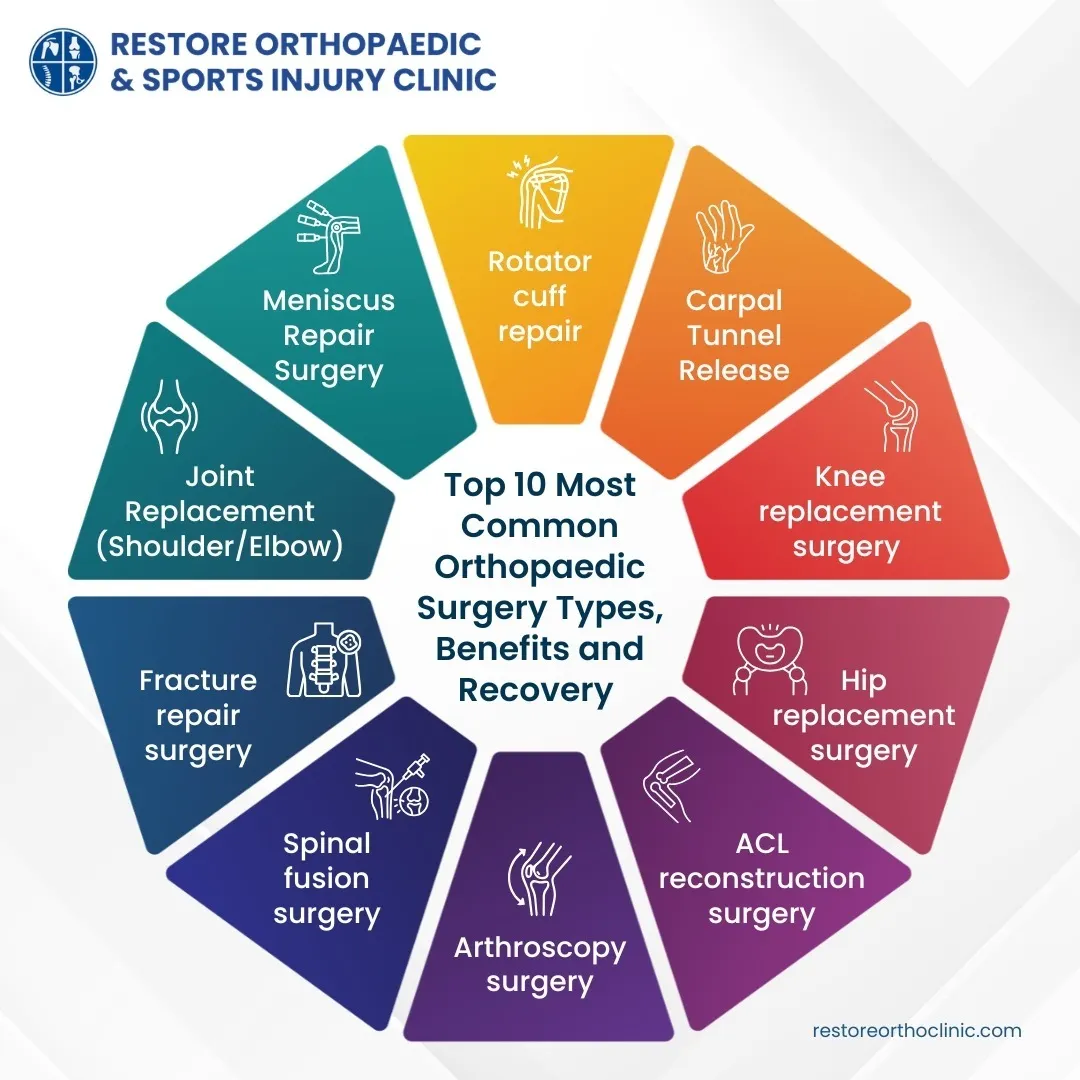
Here’s a look at the top 10 most common orthopedic surgeries, along with their benefits and what recovery typically looks like.
1. Knee replacement surgery (Total/Partial)
This is one of the most performed orthopaedic surgeries. This procedure involves replacing damaged cartilage(knee joint) and bone with an artificial implant. It’s usually recommended for severe arthritis or injury.
Benefits:
- Relieves chronic pain caused by arthritis
- Improves mobility and quality of life
- Helps patients return to daily activities like walking, climbing stairs, and sitting comfortably.
2. Hip replacement surgery
This is performed when the hip joint wears down or is completely damaged due to arthritis, injury, or fracture. A hip replacement swaps the damaged joint for an artificial one.
Benefits:
- Eliminate chronic hip pain and restore joint function.
- Restores movements that have been lost for years
- Enhances balance, especially in older adults
3. Arthroscopy
Benefits:
- Smaller incisions, which means less scar
- Less pain and faster healing
- Lower risk of complications like infections compared to open surgery.
4. ACL reconstruction
Benefits:
- Restores knee stability
- Helps athletes return to sports and an active lifestyle
- Prevents further damage to the surrounding knee structures
5. Spinal fusion surgery
Benefits:
- Reduces chronic back pain
- Stabilises the spine after injury or degeneration
- Improves posture and prevents further spinal deformity
6. Fracture repair surgery
Benefits:
- Ensures proper alignment of bones
- Promotes faster and more accurate healing than casting
- Reduces the risk of long-term deformity or improper healing
7. Carpal Tunnel Release
Benefits:
- Reduces numbness and tingling
- Improves hand function
- Prevents permanent nerve damage if treated early
8. Meniscus Repair Surgery
The meniscus is the cushioning cartilage in the knee. When it tears, surgeons either repair it or trim the damaged portion.
Benefits:
- Preserves knee function and restores pain-free movement
- Protects the knee joint from further damage
- Helps maintain natural cushioning in the knee joint
9.Rotator cuff repair
Benefits:
- Restores shoulder strength and range of motion
- Relieves persistent pain
- Enables patients to perform overhead activities without discomfort
10. Joint Replacement (Shoulder/Elbow)
Benefits:
- Relieves severe pain
- Improves joint mobility
- Enhances independence in performing daily tasks
Bottom line
Tags:
Share This:
FAQ
1. What are the early signs of arthritis?
Early signs may include persistent joint pain, stiffness (especially in the morning), swelling around the joint, reduced flexibility, and discomfort that worsens with activity.
2. Is it normal to have joint pain as we get older?
Occasional joint pain can happen with age due to wear and tear on the joints. However, ongoing or worsening pain should be evaluated by an orthopedic surgeon to rule out arthritis or other joint conditions.
3. How can I tell if my joint pain is arthritis or just temporary pain?
Temporary joint pain usually improves with rest, ice, or mild medication within a few days. Arthritis-related pain tends to last longer, may come with swelling or stiffness, and often affects joint movement over time.
4. Can arthritis affect young adults?
Yes. While some types of arthritis are more common with age, conditions like rheumatoid arthritis can affect people in their 20s, 30s, or even younger.
5. Can arthritis be cured?
While many types of arthritis cannot be completely cured, early diagnosis and proper treatment from an orthopedic surgeon can help manage symptoms, slow progression, and improve quality of life.