

5 Signs You Need to See an Orthopaedic Specialist for Knee Pain
Knee pain has a sneaky way of becoming part of your daily life. At first, it’s just a little stiffness in the morning or a dull ache after a long walk. Most of us stretch a bit and ignore it, thinking it will go away on its own. But when this discomfort refuses to leave, then it’s an alarming sign that your body is trying to tell you something more serious is going on.
Not all knee pain is dangerous, likewise not all knee pain is ‘normal’. When the pain is persistent and is affecting your day-to-day life, then you must stop looking for quick remedies and start googling “best knee orthopaedic near me”. Let’s walk through five signs that indicate it’s time to see an orthopedic specialist for your knee pain and get your knee evaluated properly.
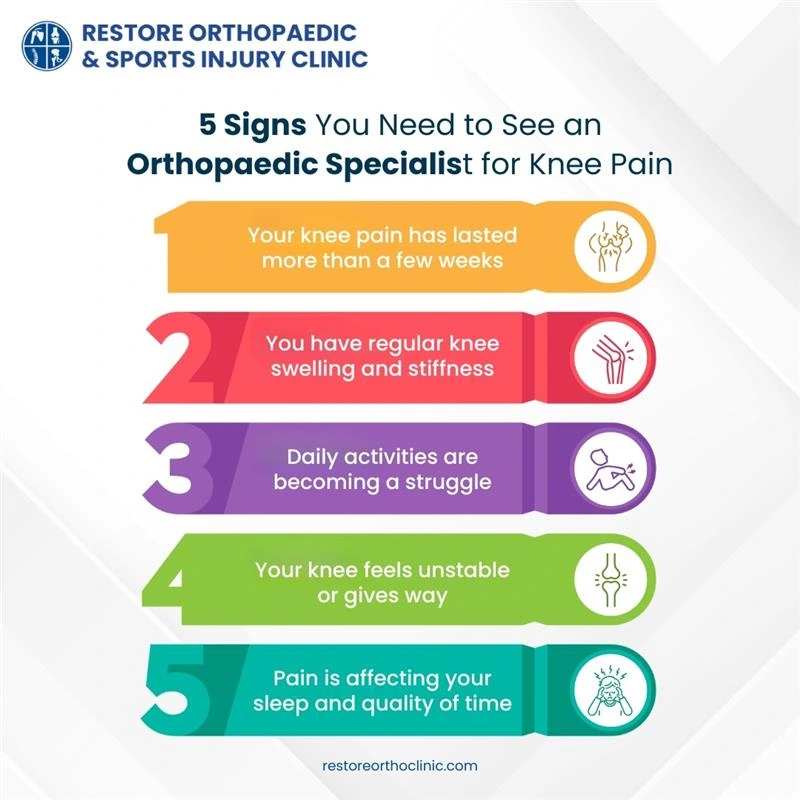
1. Your knee pain has lasted more than a few weeks
It’s normal to have knee pain occasionally after a heavy workout, travel, or a completely active day. But if the knee pain has stuck with you for around a week or two, even after getting better rest and a hot/ice bag massage, then it’s a clear red flag.
Chronic knee pain may signal underlying issues such as cartilage damage, ligament injuries, or early arthritis. These conditions don’t tend to heal on their own, and waiting too long can actually make them worse. In this stage, most people start looking for “causes of knee pain” online or begin trying home remedies. But it is only a wise decision to consult an orthopedic specialist who can identify what’s really going on and get you on a proper treatment plan.
2. You have regular knee swelling and stiffness
We all have observed a little swelling right after an injury. It’s pretty normal. But if you notice regular ongoing swelling, stiffness or warmth around your knee without any obvious reason, then it’s not something to ignore.
When your knee looks puffy most days or feels tight and hard to bend, there is a high chance that it is a sign of inflammation, fluid buildup, or joint damage. And this clearly needs professional attention.
The best orthopedic surgeon takes time to understand the real cause of the swelling and suggests an effective treatment plan tailored to your needs. Ideally, getting an accurate diagnosis early can save you a lot of pain and often prevents the condition from getting worse.
3. Daily activities are becoming a struggle
Knee pain may sound like a simple discomfort. But you only understand the severity of it when this pain starts interfering with your daily routine. If climbing stairs, getting out of a chair, sanding for an extended period or walking a short distance is leaving you in reactive pain, then it’s time to stop pushing through the pain. This is the time you plan your day around your knee.
At this point, it’s worth visiting a knee specialist for a thorough evaluation and getting a conservative treatment plan. While surgery isn’t always the first step, a specialist may discuss all the possible options, including a partial knee replacement or total knee replacement, depending on the severity and area of damage.
4. Your knee feels unstable or gives way
Does your knee ever feel like it’s locking up or catching during walking or climbing stairs? That sensation of instability is often linked to ligament injuries or damage within the joint itself.
This isn’t something that heals well on its own, and one of those signs you really don’t want to push through. Knee instability puts you at serious risk for falls and additional injuries. An experienced orthopedic surgeon near you can assess the stability of your knee and recommend the right treatment plan.
5. Pain is affecting your sleep and quality of time
If knee pain is disturbing your sleep or leaving you tired, irritable, and less active, then it’s your body’s way of saying, “This needs attention”. In this stage, it’s more than just a physical issue.
Many people delay care, hoping the pain will magically disappear. But seeing a trusted knee orthopaedic specialist early can mean faster relief, better outcomes, and fewer long-term limitations.
Bottom line
Knee pain might seem like something you just have to “live with,” but that really doesn’t have to be the case. Whether you’re dealing with a sports injury, age-related wear and tear, or something that came out of nowhere, an orthopedic specialist can give you real answers and real solutions
If any of these five signs sound familiar, take that as your cue and start looking for a trusted orthopedic doctor in your area. Your knees carry you through life, and they deserve the right care.
Tags:
Share This:
FAQ
1. Is knee pain always a sign of arthritis?
No, knee pain can have many causes, including ligament injuries, meniscus tears, muscle strain, or overuse. Arthritis is just one possible reason, and only a proper evaluation can confirm it.
2. When should I see an orthopedic specialist for knee pain?
If knee pain lasts more than a few weeks, keeps getting worse, or starts affecting your daily activities, it’s a good idea to consult an orthopedic specialist. Early evaluation can help prevent long-term damage.
3. Do all knee problems require surgery?
Not at all. Many knee conditions can be managed with physiotherapy, medications, lifestyle changes, or injections. Surgery is usually considered only when other treatments don’t provide relief.
4. Can physiotherapy really help knee pain?
Yes, physiotherapy can strengthen muscles around the knee, improve flexibility, and reduce pain. It is often a key part of treatment for both early and chronic knee conditions.